Tuesday, 31 March 2015

Turning Nineteen

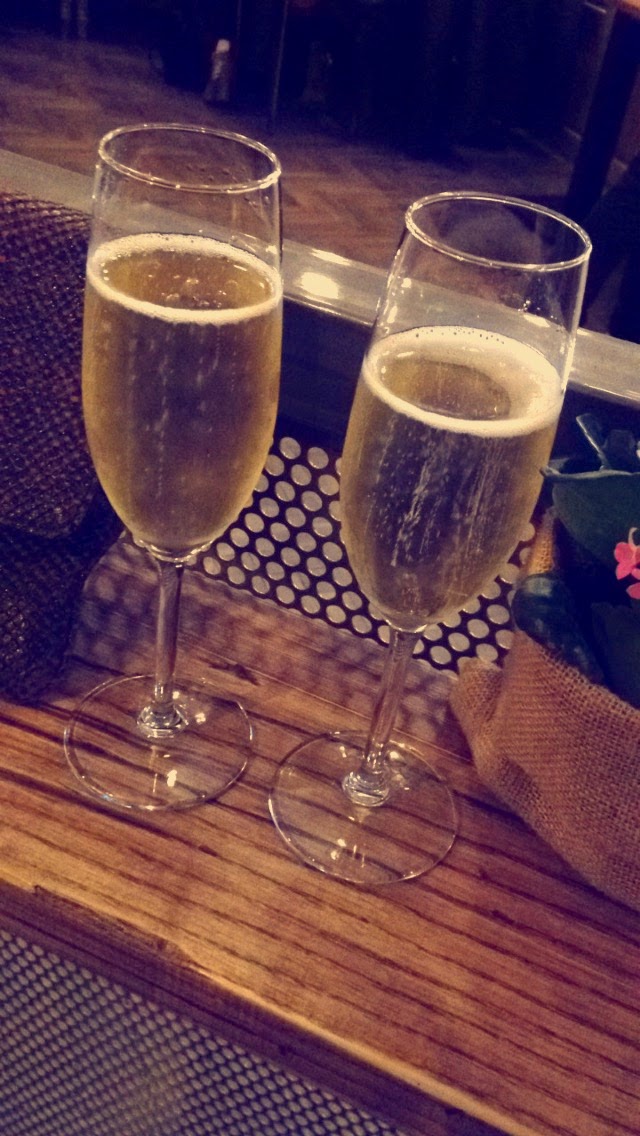
As you know if you follow my social media I celebrated my nineteenth birthday last week. It was Bradley's birthday aswell the same week so we celebrated together with all of our friends on the weekend. My family and friends got me some lovely gifts which I won't bore you with the details of. Bradley got me some gorgeous earrings from Jersey Pearl, they are stunning and so elegant - (boy did good). My actual birthday I was at Uni (poor me) but on the evening my family and I went out for a meal, where we had a complimentary bottle of bubbles to celebrate and I had brie to start and steak for main (obviously) I couldn't manage a pudding which is very unlike me!! On the weekend we had a night out with our friends at Brindley Place in Birmingham which saw in Bradley's birthday at midnight. I bought Bradley some customised Ray Bans for his Birthday which he was very happy with (I think) we spent most of Sunday chilling and watching TV until we fell asleep. It was lovely to have nothing to do or nothing to worry about, which doesn't often happen.  

The dress I'm wearing in these photos is from Monsoon, my shoes and bag are both from Miss Selfridge. My jewellery is my standard every day Pandora rings, Pandora bracelet, Olivia Burton watch as well as the Jersey Pearl earnings off Brad. I used my Jannu curlers on my hair and St Tropez for my tan, my make-up is all pretty standard to what I usually wear and on my lips is Kate for Rimmel London in 107.


Follow me on Instagram and Twitter to keep up to date with all things lifestyle and follow me on bloglovin' to make sure you never miss a post. 

Week 10: Summer in the City

This post is part of my Visual Design module online portfolio 

My client: Seasoned sessions 

The client has asked me to design and produce a poster and a ticket for there event taking place this August called 'Summer in the city'. As this is just the very first promotion for the event, the company didn't want too much information on the posters as artists and the venue is not yet confirmed. 

However, the company still want to get students and young people in Birmingham excited about the event so are starting promotion early. 

Seasoned Sessions are a very popular events company based in Birmingham who put on live acoustic music every season, this promotional material is for their upcoming Summer event. There is no need to describe on the poster who Seasoned Sessions are or what Summer in the city is because young people in Birmingham will already know and the company has a good following.  

As the event is for students and young people I decided to use a simplistic design, the simplistic design will draw the eyes to the poster and encourage people to read it. The elegant font of ItalicC will encourage the readers to want to know more about the event as it is quite simple and untelling. Also it links in well with the event, the event is for acoustic music, which is normally quite calm and simple too. 

For the typography for the clients name, I used Lucida handwriting. This is because it looks as though the clients have written it themselves and adds a little  bit of fun to the poster, which sits well and balances out the simpleness of the other fonts. 

I decided to use the image of the palm tree to coincide with the Summer theme, the client has informed me that inside the venue there will be inflatable palm trees, beach balls and sandpits. 


Week 9: Promotion in a day

This post is part of my Visual Design module online portfolio 

In order to promote Trashion to the public as a new vintage fashion magazine it is important to have promotional material. Using mock-ups I created many different promotional items I could use to promote the magazine. 

Similar to last week, I wanted to keep the Trashion identity and house style the same. Therefore I used the same manstead and same main image. This is in order to create a recognizable brand for Trashion and allow more people to identify with the brand. This manstead consists of 'Trashion' in a burnt orange colour with an exaggerated 'S'. I included the fact that the magazine was free in most of my designs in order to encourage more people to want to have it, as no cost is an enticing factor. 

As well as promoting the magazine through the adverts, I also wanted to promote the social media channels for the magazine. This meant including them on the adverts, in todays world people want to be connected on many different platforms and social media plays a big part in this, hence why I thought it was important to include. It is also easier for people to search for the magazine on Twitter whilst on the go rather than on the internet, meaning more people will be aware of the magazine and look in to it further. 


Week 7: Multimedia in a day

This post is part of my Visual Design online portfolio 

This week's production day we were asked to use mock-ups and create digital versions of the Trashion magazine we designed last week. I created a few examples of what the homepage would like like on different devices and a couple of examples of how an article would look on different devices. 

For the digital version of the magazine I wanted the manstead to be the same as it was on the magazine. This was to make sure that the magazine and its digital formats followed the same style and people could immediately recognise it. My house style included this manstead as well as the black bar as a header and footer on each page, whether it be an article or the homepage. I, again, did this so that the style was immediately recognisable as associated with the Trashion brand. 

I wanted everything to be similar in design and not to have too many differentiation's as this would take away the house style and the overall feel of the magazine. I wanted readers to be able to switch devices and still be able to navigate around the site in the same way. 

The features on the homepage would be clickable and lead the reader to that particular article. I included the images associated with the article on the homepage in order to give the reader more information and encourage them to click on the links. 

The pages at the top of the homepage are the same on each device, as it is the homepage it is important that the reader knows where they can go and their options. If this was the first time the reader had visited the website they can click on their interest whether it be fashion, beauty or reading features. 

I included social media buttons and a subscribe button on the homepage in order to redirect people to Trashion's other online platforms and other ways they can keep up to date with the brand. As these are on the homepage they are very accessible and therefore are more likely to get people clicking on them. 

Trashion Homepage on Ipad 


Trashion Homepage on desktop 


Trashion Homepage on Iphone 


Trashion article on Ipad 


Trashion article on iPhone 


Monday, 30 March 2015

Week 6: Magazine In A Day

This post is part of my Visual Design module online portfolio 

For our first visual design production day we had to design a fashion magazine. At the beginning of the day I decided on a house style which included a house font, house colours and house design. This then formed the basis of my design which I stuck to with each article on each page, this ensured my magazine was coherent in style and meant you would be able to tell that each article belonged in the magazine. However, as well as sticking to this house style I still added bits of fun in to the article by breaking the grid with shapes, images and pull out quotes. 

Font 
Headlines: Charlemagne std
Content: Constantia 

Font size
Headlines: Fit to page using size and tracking until it fits. 
Content: Size 11 

Grid style layout
3 columns on article pages, the final column on the second page of each article in block colour. 

Colour
C - 36 
M - 87 
Y - 93 
K - 0

The front cover 

I decided to use a traditional layout and style for the front cover of Trashion. I decided to do this so that it was easily noticeable as a fashion magazine. The colour of the heading is a burnt orange kind of colour, which I think works well with the vintage theme and style of the magazine. I used tracking to space out the main heading in order to make sure it filled the page. To make the magazine title more exciting I decided to exaggerate the ends of the 'S' which creates a lighting kind of style, again adding to the unique feel of the vintage style.  

The contents page 

For my contents page I decided to try and do something different and quirky to match the vintage style. Using the images of the Trashion models, I experimented with shape and included different parts of the images to create a montage on the contents page. I think this looks different and is unique, which is again similar to the vintage style of clothing. This also shows that breaking the grid and going against the house style is sometimes a good thing, it means the different pages are not all the same and therefore you aren't bored reading the magazine. 


Articles

The first article is a 'How to' guide. Therefore I made sure each point was clearly stated so that the reader could easily follow each step in the guide. I added in the images so that the reader could follow this and make sure there designs fitted the instructions given. I made the numbered points a larger font size and played with the shape so that it made the design more fun and different. This first article is one of the examples of where I have broken the grid, many of the images and some text breaks the conventional house style and grid layout, this again just creates a more fun and individual style. 


For this article I decided to use the image as the main focus point and featured it over all 3 grids on the first page. As there was a lot less text for this article than the others I was deciding between adding in other images to fill out the page and using this one as the main focus. I decided to use the main image and enlarge it over the 3 grids to firstly draw the reader in and secondly show what the article is about before the reader starts reading. I also used a pull out quote on this page in order to break the conventional grid layout and make the page more interesting. 


This third article had more text than the previous one so I had to be careful with the image sizes and placing them as I didn't want the article to over flow on to the final column which was filled with colour. As this feature was an interview I decided the first image should be of the interviewee and the images should then follow this one to create a hierarchy to push forward that the focal point was the lady being interviewed. The block of colour in the third column is important as it is part of the house style and is something that ties every page together, this is why I didn't want the article text to feature in the third column. 


The typography I used for the main body text was 'Constantia' this text has excellent readability and therefore is perfect as there is a lot of text for readers. The sizes of fonts in magazines is normally smaller, therefore I made the font size 11 in order to follow this style. As this article was a guide to shopping in London I incorporated the list format on the final part of the article, this makes the page more interesting, catches the readers eye and breaks up the article. The masthead of the magazine was in the font Charlemagne std and made to fit the page. I used this same style for each headings on every page, this created the house style and meant that the whole magazine was coherent in style.
  

For the colour palette I used black for the text and then the burnt orange colour for the headings and the final column on each page. The colour orange creates a warm and happy feeling, it also represents being social and free which is something I think works well with a fashion magazine. Vintage fashion allows people to express themselves freely with the choice of clothing they use, however it also allows you to be social because there are events put on for vintage lovers and particular groups vintage lovers can join. I also included images on every page to add in more colour and more fun to the articles. 


Gas Street Social Launch Party

Last week I was lucky enough to be invited to the Gas Street Social launch party at The Mailbox in Birmingham (which is just a quick 10 minute walk from Birmingham New Street). This new restaurant and bar focuses on 'being social'. The menu mainly features sharing platters and food that you can share with others - adding to the being social concept. Inside the decor is quirky and fun and the atmosphere is second to none. As well as the launch party that took up one area of the restaurant there was still people eating and enjoying The Mailbox's latest addition, which added to the incredible atmosphere created. The menu looked promising with a range of different things I'd like to have ordered and will when I next visit. The staff kept bringing round canapés for us to try bits of the menu - my favourite was the mushrooms in breadcrumbs (I'm sure there is a more fancy name for this). The cocktails again, looked amazing - the one we tried was 'The Socialite' which was delicious, and if you're a cocktail fan like me - I'd recommend this place for drinks of an evening after work or a weekend for meeting up with friends. 


Friday, 27 March 2015

Week 7: Researching the Media and Cultural industries

This post is part of my 'Journalism, PR & The Media' theory module online portfolio

This week we have looked at the ways in which you can go about analysing, studying and researching the media and cultural industries and why it is important to study the actual industry as well as the theory involved.

Academic research into the media industries is important because you can relate the media texts to their conditions of production which will then bridge the gap between theory and practise. By theorising production, content and economic factors it helps us better understand the industry, allowing us to understand the how as well as the why.

Media analysis is also important not only for us as academics but also for industry professionals. By completing media analysis you can target and understand a particular problem which will save costs, protect revenues and provide insights into the effectiveness of campaigns and business strategies. (Dowling, G. and Weeks, W. 2011)

In the set reading Jane Stokes comments that we often forget that the majority of people who work in the business of making cultural artefact's do so in order to make money. The profit motive is one of the factors which determines particular decisions made within these industries. This means that whatever industry you are going to study, whether it is journalism or TV production it is important to understand the economics of the industry, which is what we looked at last week when discussing political economic theory. By understanding this, it means you can understand why and how decisions are made.

Karl Marx who was a materialist would also agree, he considered the economics of a society to be crucial to understanding how the society functions at all levels. He affirmed that 'The ideas of the ruling class are in every epoch the ruling ideas i.e. the class which is the ruling material force of a society is at the same time its ruling intellectual force' (Marx and Engels, 1964;1974). If we link this to his theory of ideology it means that the ideas of those in power are pushed onto those not in power as ideologies, the unpowerful then believe these ideas to be true. Within most countries in the West, including Britain and the USA, the governments take an active interest in the media and culture industries for example; the director-general of the BBC is appointed by the board of governors (Jane Stokes, 2003) this means the government can influence how the BBC is run and therefore potentially push out ideologies to the public as Marx suggests.

There are a large number of industries which come within the rubric of 'media and culture' (Stokes and Reading, 1999; Childs and Storry, 1999). My main interest is in PR therefore I would base my political economy research around this area. I would be able to use people based evidence, as discussed in the lecture, by interviewing the contacts I made on my PR work experience placement.

Bibliography:

Dowling, G. and Weeks, W. Media analysis: what is it worth? (2011) Journal of Business Strategy, Vol 32 No 1. pp. 26-33.

Stokes, J. How to do media and cultural studies. (2003) Sage Publications. Page 100-127

Related Posts Plugin for WordPress, Blogger...